
A Material Selection Guide for Anti-Static Packaging Liners in Electronics Manufacturing
Technical Guide | ESD Foam Trays & Precision Packaging Solutions
In electronics manufacturing, anti-static packaging is not just about protection — it is an integral part of quality management systems. An increasing number of EMS factories and OEM customers are specifying pink ESD foam as the liner material for PCB/FPC handling trays. This article compares two proven solutions — Pink ESD EPE (28kg/m³) and Pink ESD EVA (30-35kg/m³) — to help you make the optimal choice based on your specific application requirements.
1. Why Pink? — ESD Color Coding Standards in Electronics
Per ANSI/ESD S20.20 and IEC 61340-5-1, the electronics industry uses color coding to identify ESD protection levels at a glance:
|
Color |
ESD Level |
Surface Resistance |
Typical Application |
|
Pink |
Dissipative |
10⁶ - 10⁹ Ω |
Liners & trays in direct contact with products |
|
Black |
Conductive |
10⁴ - 10⁶ Ω |
Tote boxes, outer containers |
|
Clear/White |
Non-ESD |
> 10¹² Ω |
Must NOT contact ESD-sensitive devices |
Pink color enables line operators to instantly verify ESD-safe status without checking labels — a critical element of 5S visual management. This is why electronics factories across Europe and North America mandate pink for all product-contact packaging liners. It is a functional identifier, not an aesthetic choice.
2. Option A: Pink ESD EPE (28kg/m³) — The Proven Standard
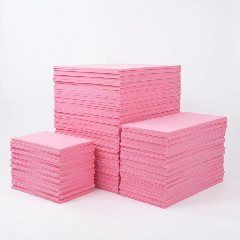
Fig.1 — Pink ESD EPE foam sheets in various thicknesses, ready for CNC machining
Pink ESD EPE at 28kg/m³ is the most widely adopted anti-static liner material in electronics packaging:
• ESD Performance: Permanently loaded internal anti-static agent; surface resistance stable at 10⁶-10⁹Ω
• Density & Support: 28kg/m³ provides adequate cavity rigidity for PCB/FPC positioning
• Machinability: CNC milling accuracy within ±0.5mm for complex cavity geometries
• Color Compliance: Pink meets dissipative-level visual identification requirements
• Cost Advantage: Excellent price-performance ratio for small-to-medium volumes
• Best Suited For: Prototype validation, low-to-medium frequency cycling (30-50 uses), short-term projects
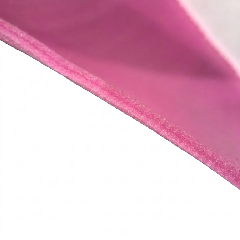
Fig.2 — Close-up of pink ESD EPE foam showing cell structure and surface texture
For pilot production or applications with fewer than 50 annual use cycles, 28kg/m³ ESD EPE delivers reliable ESD protection and product positioning at an economical price point.
3. Option B: Pink ESD EVA (30-35kg/m³) — The High-Volume Upgrade
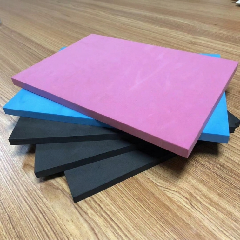
Fig.3 — ESD EVA foam sheets: pink (dissipative), blue, and black (conductive) — available in multiple ESD grades
When projects scale to mass production and cycling frequency increases significantly, Pink ESD EVA offers a substantial performance upgrade:
• Material Structure: Cross-linked closed-cell foam with fine, uniform cell structure; closed-cell ratio >95%
• ESD Performance: Same internal permanent anti-static agent technology; 10⁶-10⁹Ω; does not degrade with wear
• Dimensional Stability: Compression set <5%; cavity dimensions maintain precision after 100+ use cycles
• Service Life: 150-200 use cycles — 3 to 5 times longer than EPE
• Surface Quality: Smooth, dense cut surfaces with virtually zero particle shedding — eliminates PCB contamination risk
• Color Compliance: Available in pink to meet dissipative-level visual identification standards
• Best Suited For: Mass production, high-frequency cycling, cleanroom-adjacent SMT lines, long-term reuse programs
4. Performance Comparison: EPE vs EVA
|
Parameter |
Pink ESD EPE (28kg/m³) |
Pink ESD EVA (30-35kg/m³) |
|
Cell Structure |
Closed-cell, larger cell diameter |
Cross-linked closed-cell, fine & uniform |
|
Closed-Cell Ratio |
85-90% |
>95% |
|
Compression Set |
10-15% |
<5% |
|
CNC Milling Tolerance |
±0.5mm |
±0.3mm |
|
Particle Shedding Risk |
Moderate (requires control) |
Very low |
|
Service Life (cycles) |
30-50 |
150-200 |
|
Anti-Static Method |
Internal permanent additive |
Internal permanent additive |
|
Cost Per Use |
Baseline |
Lower (life-cycle adjusted) |
5. Cost-Per-Use Analysis
Economic comparison based on a single tray set:
|
|
ESD EPE |
ESD EVA |
|
Unit Cost (indexed) |
1.0x |
2.5-3.0x |
|
Reuse Cycles |
40 |
175 |
|
Cost Per Use |
0.025x |
0.014-0.017x |
|
Per-Use Savings |
Baseline |
32-44% lower |
Key takeaway: Although EVA has a higher unit price, its cost-per-use is actually 32-44% lower than EPE in high-frequency cycling scenarios — while also reducing downtime and management overhead associated with frequent tray replacements.
6. Selection Recommendations
We recommend a phased approach based on your project stage:
• Pilot / Small-Batch Phase → Pink ESD EPE (28kg/m³): Fast delivery, cost-effective, validate tray design
• Mass Production / High-Cycle Phase → Pink ESD EVA (30-35kg/m³): Lower long-term cost, superior consistency, higher cleanliness
• Seamless Transition: Cavity designs validated with EPE can transfer directly to EVA with no redesign required
Regardless of material choice, we guarantee: pink color compliance with international ESD standards, permanent internal anti-static protection, CNC precision machining to tight tolerances, and batch-level ESD performance test reports included with every shipment.
7. Our Capabilities
• Materials: Pink ESD EPE (18-28kg/m³) and Pink ESD EVA (30-35kg/m³) both available
• Processing: CNC precision milling, cavity tolerance ±0.3mm
• ESD Performance: Internal permanent anti-static agent, surface resistance 10⁶-10⁹Ω
• Quality Assurance: Dimensional inspection report + ESD surface resistance test report with every batch
• MOQ: EPE — no minimum; EVA — minimum 1m³
• Custom Capability: Trays tailored to your tote box dimensions; multi-variant, multi-spec simultaneous delivery
For custom ESD foam tray design, material samples, or quotation inquiries, please contact our team. We provide complete packaging solutions from design to delivery, tailored to your specific requirements.